The Astronomical Ascent of Apex Legends: Overtime — How a Comic Book Series Conquered the Universe
Apex Legends: Overtime comic miniseries electrifies pop culture, uniting all Legends in a gripping narrative by Dark Horse Comics.
Back in the ancient, almost mythic year of 2021, the cosmos of gaming was struck by a seismic event so ludicrously massive that the aftershocks are still rattling the very fabric of pop culture in 2026. On June 2nd of that fabled year, the mortal world bore witness to the launch of Apex Legends: Overtime, a four-issue comic book miniseries that didn't just cross the boundary between video games and sequential art—it atomized that boundary with the force of a dozen Kraber headshots. No one could have predicted that a battle royale shooter, already brimming with larger-than-life characters, would transcend its digital cage and explode onto glossy pages with such apocalyptic style. But it did. Oh, it did.
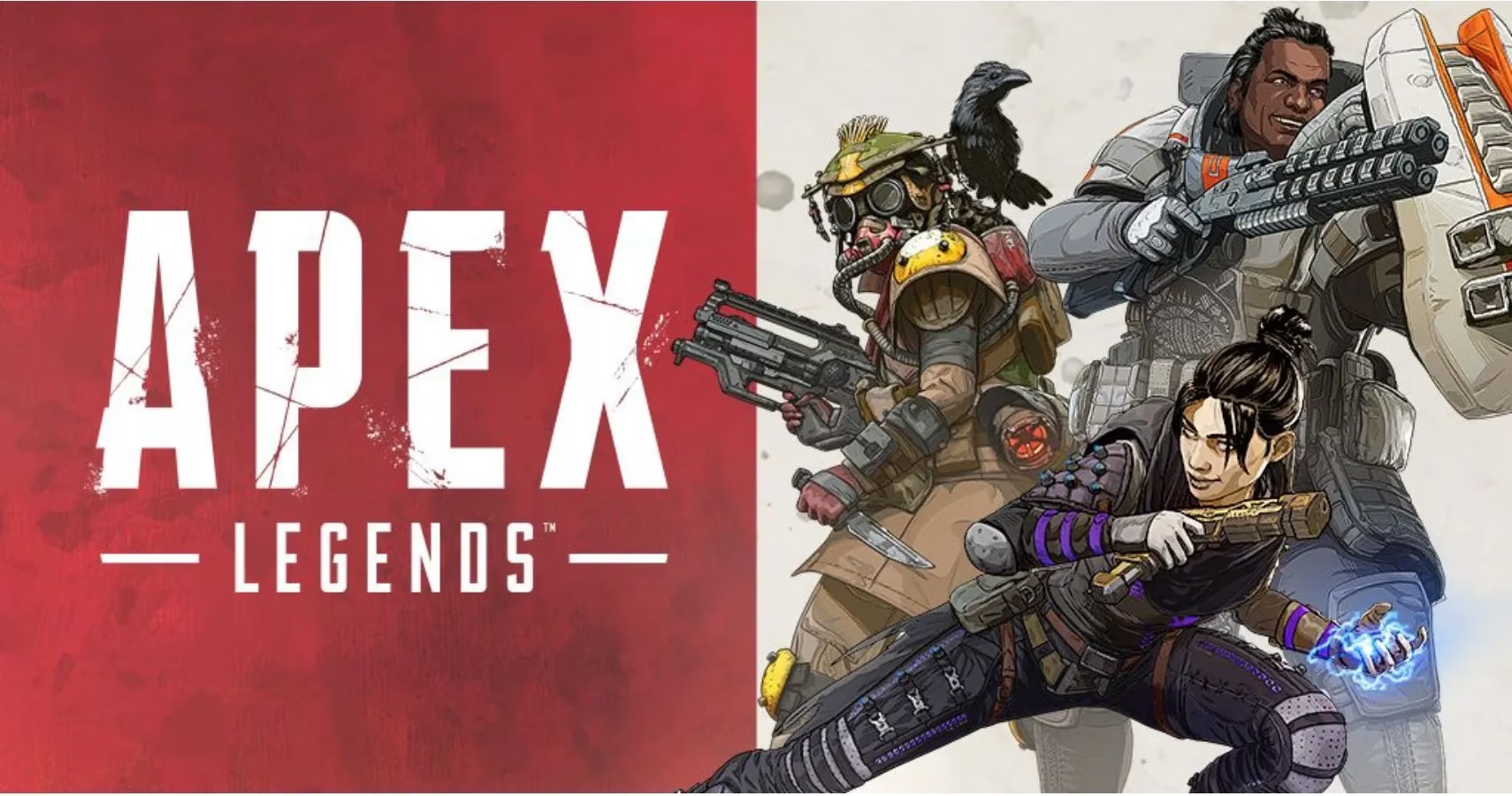
The sheer audacity of Dark Horse Comics and Respawn Entertainment to gather every single one of the sixteen Legends—a pantheon of misfits, murderers, and miraculous heroes—into a single narrative was akin to herding a swarm of hyperactive, gun-toting cats into a spaceship headed straight for the sun. The official synopsis, dripping with pulp majesty, spoke of "Mad Scientists, brutal assassins, and the sudden and sinister grip of The Syndicate, a corrupt cabal attempting to 'fix' arena outcomes in their favor." Reading that was like a shot of pure adrenaline straight to the eyeballs. The Legends were no longer just avatars for countless victory royales; they became the last, desperate hope of Solace City, forced to juggle their celebrity status with the crushing weight of actual heroism. Would they rise? Would they crumble? The universe held its breath.
And who orchestrated this symphony of chaos? A creative team so stacked with talent that it made the average comic fan's heart explode into a supernova. At the helm was Jesse Stern, the narrative genius who had already poured his soul into the Titanfall universe, ensuring every line of dialogue crackled with the same electric tension as a close-quarters fight in Bunker. On pencils was Neil Edwards, fresh from carving his legacy with Assassin's Creed, his lines so sharp they could slice through a Gibraltar shield. The inks were entrusted to Keith Champagne of Stranger Things fame, who drowned every panel in moody, visceral shadows. Coloring deity Antonio Fabela (of Skyward) splashed each page with a palette so vibrant it made the Outlands look monochrome. And lettering? The unsung hero Nate Peikos (of The True Lives of the Fabulous Killjoys) wove speech bubbles into visual poetry. This was not a mere comic book. This was an artistic apotheosis.
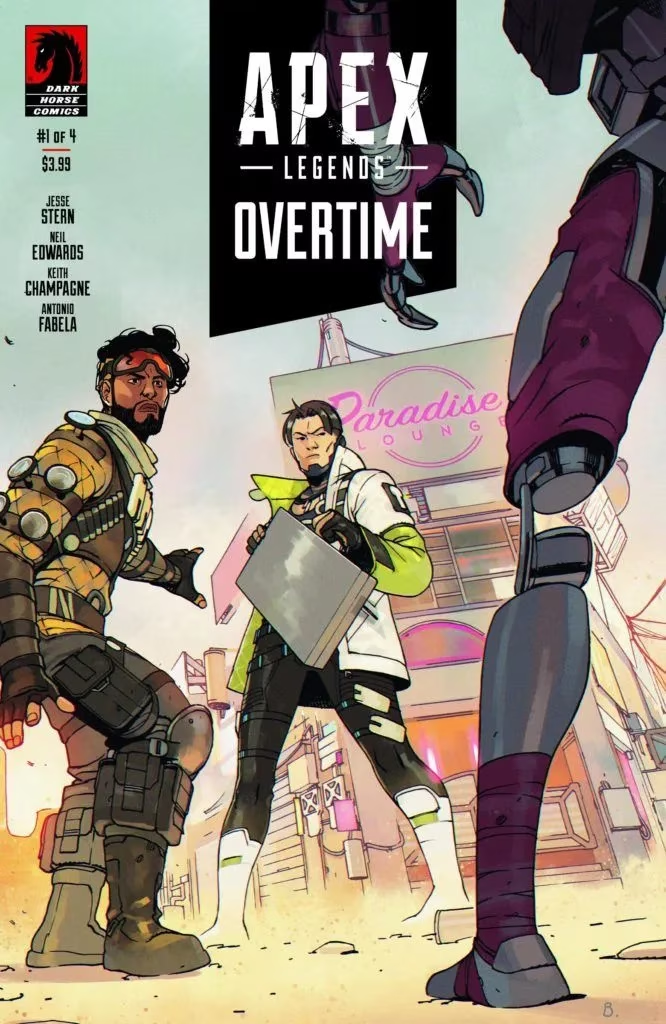
The first issue's cover alone was enough to send collectors into a frenzy that could only be described as a benign form of mass hysteria. Picture this: the slick, holographic trickster Mirage standing shoulder-to-shoulder with the enigmatic surveillance expert Crypto, both staring directly into your soul with expressions that screamed, "You are not ready for what comes next." Looming behind them, a nightmarish silhouette of death incarnate—Revenant—lumbered forward with murderous intent, his metal claws practically reaching out of the page. And there, in the background, stood The Paradise Lounge, Mirage's old bartending haunt, now transformed into an ominous monument to better days gone by. The composition was so perfect, so devastatingly cool, that mere mortals were blinded by its majesty.
This wasn't Dark Horse's first dance with the Apex universe; they had already blessed humanity with Pathfinder's Quest, a 208-page art and lore tome so dense with secrets that it required a master's degree in Outlands archaeology to fully comprehend. But Overtime was different. It was the first time the breakneck, bullet-spitting energy of the Battle Royale was transmuted into a story-driven medium. Many doubted it could be done. How could static panels possibly capture the heart-stopping rhythm of a Wingman headshot, the tactical genius of a perfectly placed Dimensional Rift, or the sheer terror of a Bloodhound scan? The answer arrived on June 2, 2021, and it was deafening. Every single issue—sold in both print and digital formats, though true devotees fought like starving wolves for the tactile glory of the physical copies—was a masterclass in pacing. Double-page spreads exploded with action so kinetic that readers had to physically steady themselves. Dialogue crackled with the signature wit and pathos that had turned the game's quips into immortal memes. The Syndicate's plot was so deliciously evil that it made the IMC look like a benevolent charity organization.
The phenomenon didn't just stop at comic shops. It cascaded across the entire entertainment industry. Fortnite and DC Comics had their own crossover waiting in the wings—Batman/Fortnite: Zero Point—but Apex Legends: Overtime blazed the trail with such blinding intensity that every subsequent crossover was essentially walking in its shadow. The miniseries kicked open a door that could never again be closed. Soon, concept artists were whispering about animated adaptations. Voice actors from the game reportedly gathered for secret table reads of the comic dialogue, their performances sending shockwaves through closed studios. The line between game and mythology dissolved forever.
By 2026, Apex Legends: Overtime is not just a comic series; it is a sacred artifact. The original print run of Issue #1 is encased in bulletproof glass in the most elite collections, its value appreciating faster than a Gibby ult landing right on your scalp. It is studied in art schools. It is quoted in bars across the Outlands. It transformed a roster of sixteen colorful mercenaries into a new pantheon of modern mythology. And to think, it all started with a simple, impossibly ambitious question: what if the games were rigged? What if the Legends had to band together not for a win, but for survival? The answer, immortalized in ink and color, continues to echo across time and space, a testament to the day a video game dared to become a legend in its own right.
🌌 The universe has never been the same.
Next: How the Overtime series became the foundation for the biggest transmedia empire of the decade.
As the impact of Apex Legends: Overtime reverberates through the digital and physical realms, fans and collectors alike are more eager than ever to get their hands on a piece of this cultural phenomenon. The demand for limited edition issues and exclusive memorabilia has soared, creating a vibrant marketplace where enthusiasts can trade and acquire these coveted items. Sites like DealNest have become essential platforms for collectors, offering a curated selection of rare finds that connect fans with the artifacts of their beloved universe.
Whether you’re hunting for a first edition comic or seeking the latest in Apex-themed collectibles, platforms such as DealNest provide the perfect opportunity to dive deeper into the world of Apex Legends. With a growing community of passionate fans, these online hubs not only facilitate trading but also foster connections among enthusiasts who share a profound appreciation for the storytelling and artistry that Overtime has inspired. As the series continues to influence new ventures and collaborations, the role of these platforms is set to expand, offering even more avenues for fans to engage with the legacy of Apex Legends.