Starting Strong: Easiest Apex Legends Characters for New Players in 2026
Apex Legends beginners will find Pathfinder, Lifeline, and Bloodhound the easiest legends for learning movement and teamwork in 2026.
I remember my first day in Apex Legends back in 2019 like it was yesterday. The drop ship doors opened, I fumbled through the character select screen, and within seconds I was sprinting across Kings Canyon completely clueless. Fast forward to 2026, and the Outlands have changed dramatically—seven years of seasonal updates, new maps, weapon balance reworks, and a colossal roster of 24 playable legends. If you’re just jumping in for the first time (or returning after a long break), that wall of faces can be paralyzing. I’ve been in those boots, and I’ve helped dozens of friends find their footing. The truth is, the best way to learn Apex isn’t to chase the flashiest new legend with a complex toolkit. It’s to pick someone simple, forgiving, and team-friendly. That’s exactly why I still steer every newcomer toward three specific launch legends: Pathfinder, Lifeline, and Bloodhound. They were great in 2019, and in 2026 they remain the easiest characters to understand, the most supportive for your squad, and the least punishing while you’re still learning movement, looting, and gunplay.
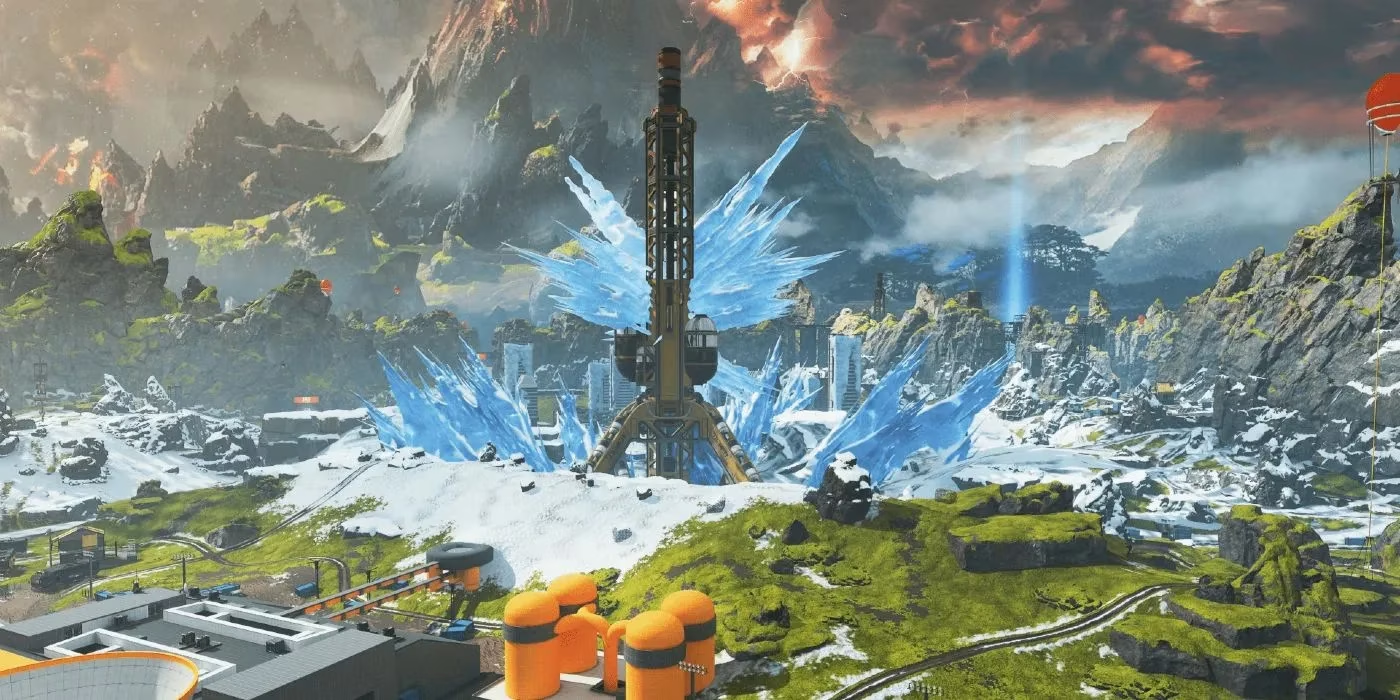
Before we dive into each character, let me clarify what “easy” really means in a battle royale that blends hero-shooter abilities with high-mobility combat. You want a legend whose passive, tactical, and ultimate abilities work intuitively—no multistep combos, no split-second timing that gets you killed if you misclick. You also want someone who contributes to the team even when your aim is shaky. In 2026, the meta constantly shifts as developers tweak cooldowns and rework kits, but these three originals have kept their cores intact because they were built on rock-solid fundamentals. They are also free unlocks, so you won’t need to grind Legend Tokens or spend real money just to try them out.
Pathfinder – The Forward Scout
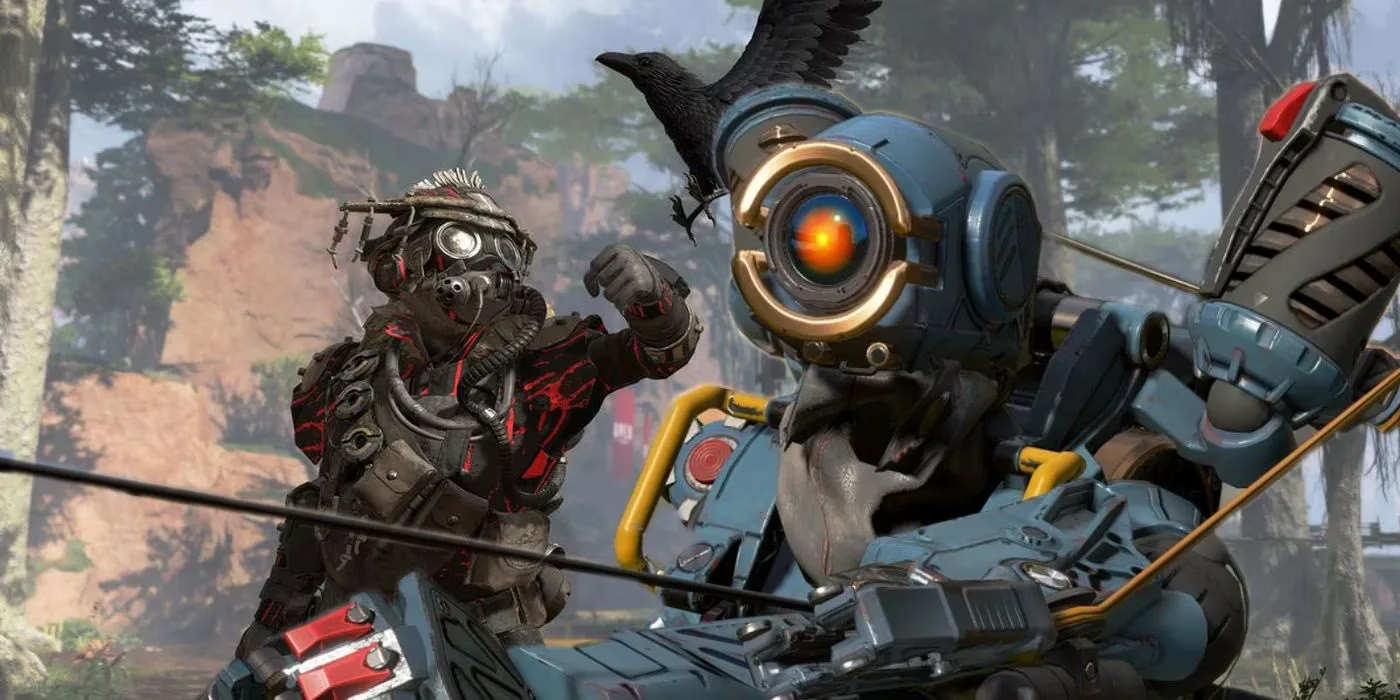
Pathfinder was my first main, and he remains the perfect blend of mobility and reconnaissance for a rookie. Being a cheerful robot with a zipline is already a personality win, but his abilities translate directly into spatial awareness—something every new player desperately needs. His tactical ability, the Grappling Hook, is the most intuitive movement tool in the game. In the hands of a veteran, it can slingshot you across entire POIs, but beginners can use it simply to climb rooftops, escape a bad fight, or reposition to higher ground. There’s no complex charge-up or targeting reticle puzzle; you point, grapple, and swing. I’ve seen fresh players survive ambushes purely because they panic-grappled onto a ledge while enemies were still searching for them.
His passive, Insider Knowledge, turns you into a zone-reading asset. By interacting with a survey beacon, you reveal the next ring location and significantly reduce the cooldown of your ultimate. In 2026, with maps like Storm Point and E-District featuring unpredictable terrain, knowing where to rotate twenty seconds early can save your whole squad from gatekeeping teams. As a new player, you won’t be expected to make the rotational calls, but using a beacon instantly gives your more experienced teammates the intel they need—and they’ll appreciate it.
Pathfinder’s ultimate, the Zipline Gun, creates a zipline from your position to a targeted spot up to two hundred meters away. The whole team can ride it, including enemies, so placement matters, but that’s the beauty: it’s a low-consequence mistake. Even if you put a zipline in a suboptimal spot, you still created a high-speed rotation path that might save a teammate stuck in the storm. I’ve won countless matches simply by ziplining my knocked squadmates to safety while the ring closed. With the grappling hook giving you constant practice on movement physics and the zipline offering easy team utility, Pathfinder teaches you how Apex’s flow works without ever punishing you for experimenting.
Lifeline – The Combat Medic
If shooting isn’t your strong suit yet, Lifeline lets you contribute enormously while staying slightly behind the front line. She’s the definitive support legend, and her 2026 rework (which introduced the mobile D.O.C. drone and improved revive shield) made her even more beginner-friendly. Her tactical ability, D.O.C. Heal Drone, deploys a small drone that heals anyone standing near it. You don’t have to aim it at a specific teammate; just drop it behind cover and watch everyone’s health climb. During chaotic third-party fights, that passive healing often keeps the squad alive long enough to reset shields and re-engage.
Her passive, Combat Revive, is where Lifeline truly shines for new players. When you start reviving a teammate, the D.O.C. drone takes over the process, leaving you free to fire back, reposition, or throw grenades. The drone also projects a directional shield that blocks incoming shots. This means you can pull off a revive right in the middle of a firefight without having to perfectly time a slide or dodge. I’ve seen first-day players save entire games by clutching a revive while the enemy team pushed, only to find our squad fully reset and ready to counter. It’s a heroic feeling that requires zero mechanical skill—just the awareness to hold down the interact key.
Lifeline’s ultimate, the Care Package, calls down a drop pod containing high-tier loot: armor, weapons, healing items, and occasionally a gold knockdown shield or backpack. In 2026, with the heightened loot pool, this care package can turn a scrappy edge-of-ring fight into a fully kitted comeback. New players worry too much about finding the perfect loadout; Lifeline’s ultimate removes that pressure by delivering the goods straight to your team. Even if you can’t win a one-on-one duel, you’ve given your squadmates the gear to carry the match. Over time, you’ll naturally learn weapon preferences and loot economics just by seeing what the pod drops—all while being the most appreciated legend on your team.
Bloodhound – The All-Seeing Tracker
Some new players freeze up because they don’t know where enemies are. Bloodhound eliminates that anxiety with a kit built entirely around information. This technological tracker remains one of the most picked legends in ranked and casual play alike, and in 2026 their abilities have received quality-of-life updates that make clue reading even clearer. Their passive, Tracker, highlights enemy activity within the last ninety seconds: footprints, bullet casings, blood trails, used doors, and even recently interacted objects. As someone who used to wander aimlessly into hidden squads, I can attest that following these glowing clues teaches you the natural player flow across every map.
Bloodhound’s tactical, Eye of the Allfather, is the ultimate “press Q to see everything” button. It scans a wide forward-facing cone and reveals enemies, traps, and interactive objects through walls. A small pop-up tells you exactly how many hostiles were detected. Yes, enemies get a brief alert that they’ve been scanned, but as a rookie you’re not trying to be stealthy—you just want to know if someone is hiding in that building ahead. Combine this with voice communication or the ping system, and you become the team’s reconnaissance nerve center without ever firing a shot. I’ve had games where I did zero damage but called out fifteen scans; my teammates thanked me because they could pre-fire corners and win fights easily.
Their ultimate, Beast of the Hunt, cranks up aggression while keeping things simple. Activating it boosts your movement speed and switches your vision to a high-contrast greyscale mode where enemies glow red and allies appear blue. Footprints from recent enemy movement also turn bright red, letting you track fleeing opponents with ease. For a new player, the speed boost lowers the risk of being caught out of position, and the visual clarity cuts through the visual clutter of explosions, thermite flames, and foliage. Downing an enemy extends the duration, so even a single successful engagement can snowball your squad through a whole fight. Best of all, there is no complex resource management or placement precision required—just pop the ultimate when you hear gunshots and let the primal hunt begin.
Why These Three Still Dominate the New-Player Experience
Apex Legends in 2026 offers more tactical depth than ever, with legends like Conduit, Vantage, and Catalyst adding layers of shield mechanics, sniper mobility, and area denial. However, those tools demand positioning knowledge and team coordination that simply aren’t intuitive for a beginner. Pathfinder, Lifeline, and Bloodhound each fill a fundamental role—mobility, healing, and recon—with straightforward, low-cooldown abilities that work even when you misuse them a little. Their kits are transparent: you see a zipline, you ride it; you see a drone, you stand near it; you see a scan wave, you know where the enemies are. This transparency accelerates your learning curve for map layouts, rotation timing, and combat flow because you aren’t staring at ability descriptions mid-fight.
I also love that these legends foster team play from the very first drop. Nothing builds confidence like a squadmate typing “ty” after you revive them with Lifeline’s shield, or pinging “great scan” as Bloodhound. Apex is a social survival game, and when you contribute effectively early on, you’re more likely to stick around and experiment with trickier legends later. With seven years of content behind the game, there’s never been a more exciting time to dive into the Outlands. But trust me: start with the originals. Learn the grapple, clutch a revive, and track your prey—these three legends will make you a better player faster than any flashy new face ever could.