PUBG Bots Presence and Matchmaking System in 2026
Yes, PUBG still has bots in 2026, strategically integrated to enhance matchmaking and new player onboarding. Understanding their presence across modes and identifying their predictable behavior is crucial for optimizing your gameplay experience.
If you've been wondering are there bots in PUBG, the short answer is still yes. In 2026, PUBG: BATTLEGROUNDS continues to use AI opponents as part of its matchmaking system, and they are very much an intentional feature rather than some leftover quirk. Once you understand when bots show up, why they appear, and which modes lean on them the most, it becomes a lot easier to read your lobbies and set expectations before you even hit the ground.
Are There Bots in PUBG in 2026
Yes, PUBG still has bots in 2026, and Krafton has shown no real sign of phasing them out completely. The idea behind them has stayed pretty consistent: bots help fill matches when player counts are low, and they also make the early experience less brutal for newer accounts that would otherwise get thrown straight into sweaty lobbies. That approach is still clearly part of the game's design.
That said, bots are not spread evenly across every queue. New accounts and players sitting in lower-MMR brackets are far more likely to run into them, especially during those first several matches. Region and time matter a lot too. If you're playing in a smaller server region or queuing during off-hours, the system is much more likely to pad the lobby with AI so matches can start on time.
Platform also changes the picture a bit. PUBG Mobile runs on a separate ecosystem with its own bot framework, and that side has involved outside AI partners like GameBot to improve onboarding and retention. On PC and console, bot behavior is still mainly handled through Krafton's internal systems. Those bots are usually less advanced, although Krafton's 2026 AI-first direction suggests that gap may keep shrinking.
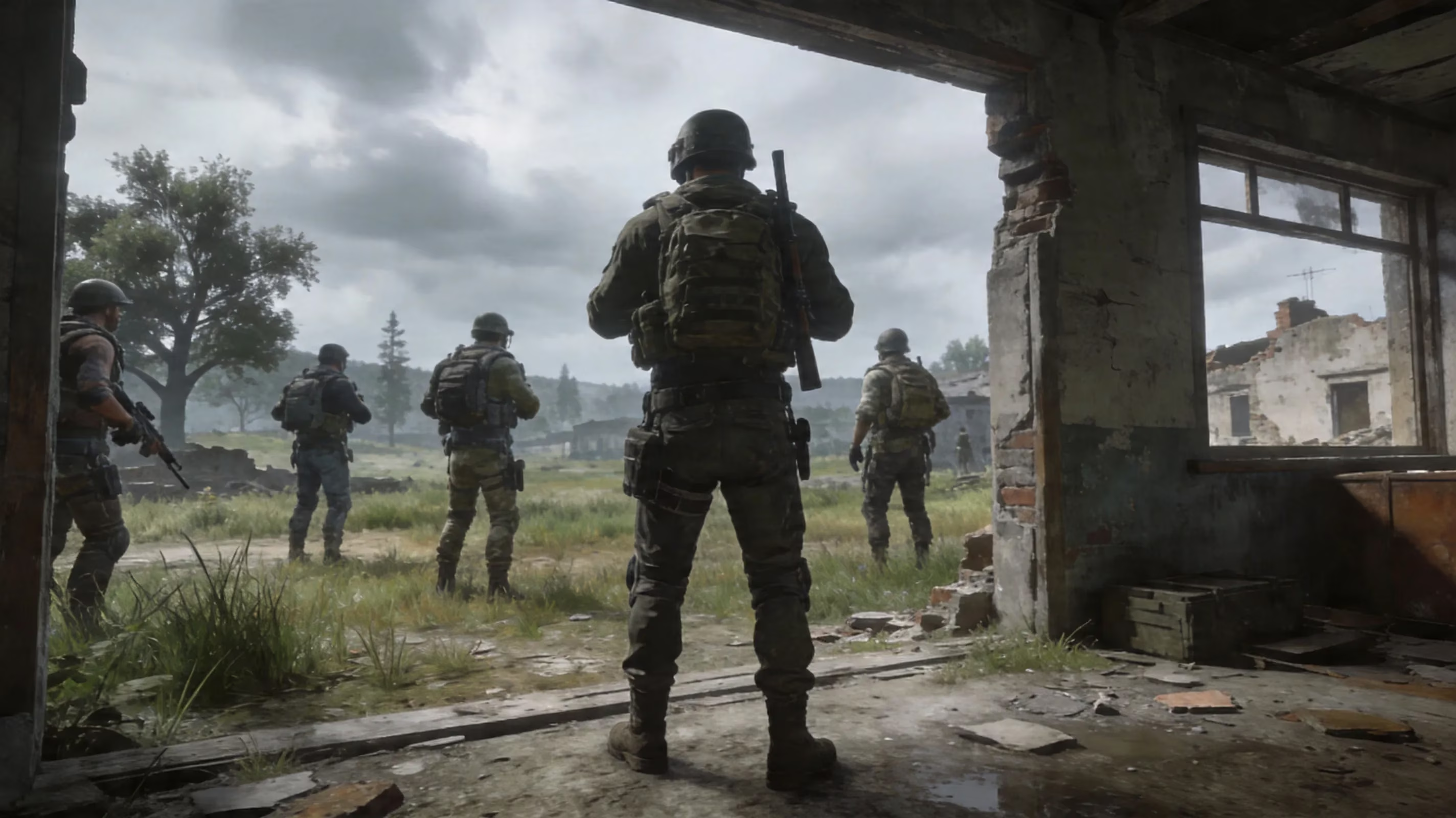
PUBG Bot Lobbies and Matchmaking Rules
PUBG's matchmaking works around what you could basically call lobby health. If the queue can't gather enough real players fast enough, the system starts filling the remaining slots with bots. The exact number changes from match to match. A healthy lobby might only get a few AI players, while a struggling queue can end up with a much heavier bot ratio.
Casual Mode is where you'll see the most bots by design. It's meant to be a lower-stress environment, so the game leans harder on AI there to keep queue times short and early fights manageable. For newer players, it's a useful place to learn looting routes, movement, and basic gunplay before stepping into tougher Normal Match lobbies.
Normal Match sits somewhere in the middle. PUBG uses a kind of onboarding curve here, where newer or lower-MMR accounts see more bots at first, then less of them as match count rises and hidden MMR improves. In other words, the more established your account becomes, the more human your lobbies usually get.
Ranked is the clear exception. Under normal conditions, Ranked is almost entirely human-only because competitive integrity matters way more there. In very rare edge cases—think deep off-peak hours in low-population regions—you might still wonder about AI presence, but for practical purposes, Ranked should be treated as a real-player queue.
How to Tell if There Are Bots in PUBG
Even with smarter AI in 2026, bots still have some pretty obvious tells if you know what to watch for. The biggest one is movement and pathing. Bots often run in straight or overly simple lines toward loot, buildings, or the safe zone, and they usually don't move with the same urgency, hesitation, or unpredictability that real players do.
Their looting habits also stand out. Bots tend to grab items without much logic behind the choice, like picking up gear that doesn't really fit the rest of their loadout or skipping upgrades a human player would almost never ignore. Healing is another giveaway. A bot caught in a bad spot might stop and bandage in the open during zone pressure instead of repositioning first or using a better heal at a smarter time. Smoke usage is also very limited, especially during active fights.
In gunfights, the pattern becomes even easier to spot. Bots often hip-fire up close instead of ADSing, and their tracking can feel weirdly rigid—almost locked in, but without the small corrections that experienced players naturally make. Their peeks are slower, they rarely lean well, and their timing tends to feel mechanical. If you're still unsure after a kill, the death cam or replay can help a lot since bot movement usually looks extremely linear and predictable.
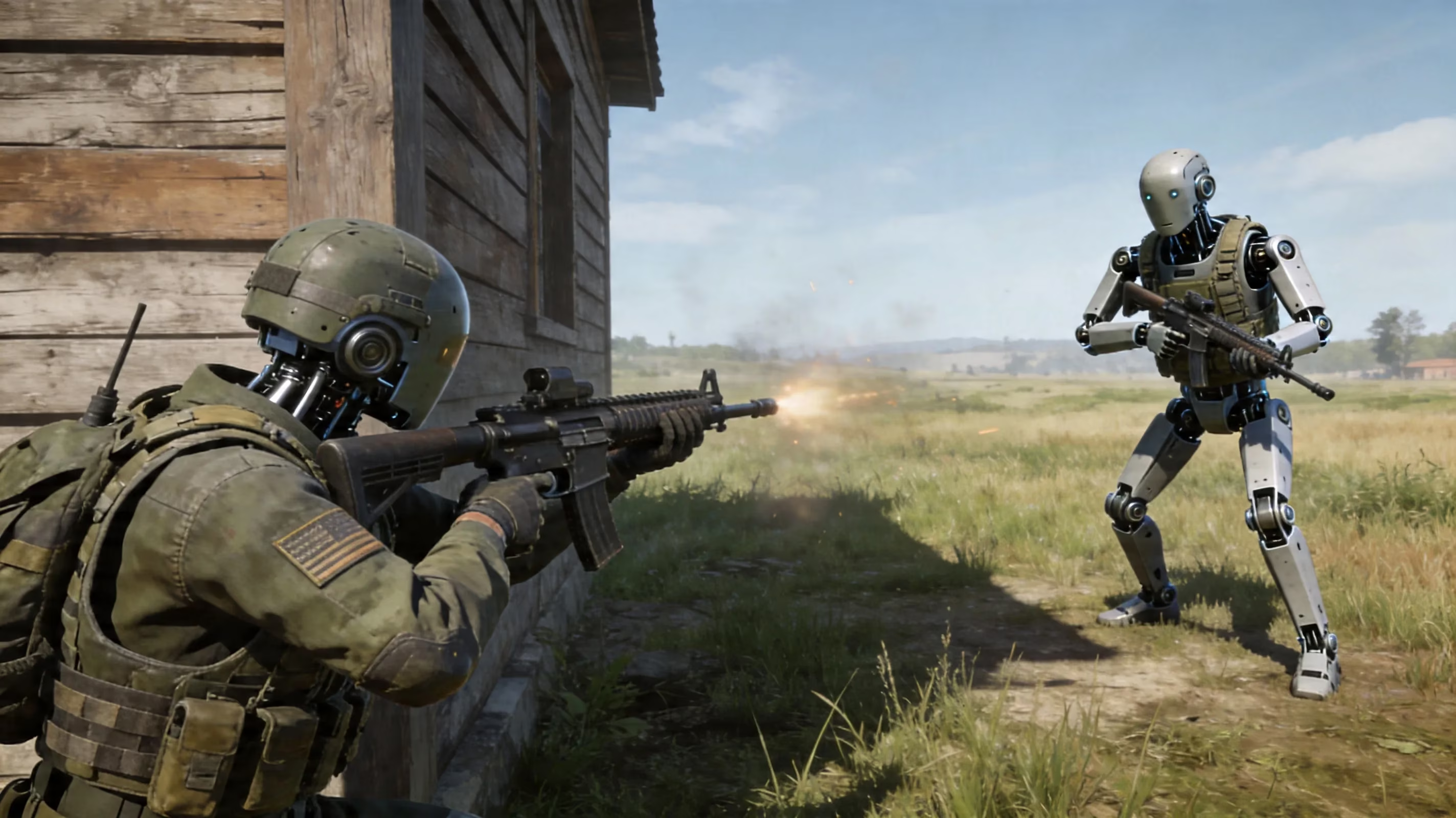
PUBG Modes With the Most Bots
| Mode | Bot Presence | Notes |
|---|---|---|
| Casual Mode | High | Built for onboarding and usually bot-heavy |
| Normal Match (new account) | Medium-High | Bot count drops as hidden MMR rises |
| Normal Match (established) | Low-Medium | Depends heavily on region and queue time |
| Ranked Mode | Very Low | Almost entirely real players in normal conditions |
| Off-Peak / Niche Region | High | Lower player counts force more AI filling |
Casual Mode is still the most bot-heavy queue in the game. It almost works like a live training space, giving you room to test drops, weapons, and basic rotations without getting instantly punished by coordinated squads. If your goal is easier matches, this is the most reliable place to start.
Off-peak hours in smaller regions push bot numbers up across almost every non-Ranked mode. If you're queuing Normal Matches late at night in a low-population region, seeing a lobby with 30% to 50% bots is not unusual at all. That's just the system keeping the queue moving.
There are also some mode-specific trends worth noting:
-
New account matches usually have elevated bot counts for roughly the first 5 to 15 games.
-
Duo and squad queues can sometimes feel more bot-heavy than solo, depending on region health.
-
TPP lobbies often show slightly more bot presence than FPP, partly because they attract a broader and more casual player base.
That early-account bot boost is especially deliberate. Krafton wants new players to get kills, survive longer, and feel some momentum early on, because that tends to improve retention in a big way.
Can You Get Bot Lobbies in PUBG
There is no guaranteed way to force a fully bot-only lobby in PUBG: BATTLEGROUNDS. The matchmaking system always tries to prioritize real players first, then fills empty slots with AI only when needed. So if you're hoping for a true all-bot match on demand, that's not really how PUBG works.
What you can do is increase the odds of landing in a bot-heavy lobby. The most common method players talk about is using a fresh account, queuing Casual Mode, and playing during off-peak hours in a lower-population region. That combination gives you the best shot at seeing a high concentration of bots, even if it still won't guarantee a full AI lobby.
Party MMR matters too. If a high-MMR player teams up with a newer or lower-MMR friend, the game tries to split the difference when building the lobby. Sometimes that leads to more bots than the stronger player would normally see. It's not a consistent exploit, just more of a side effect of how the matchmaking blend works.
One thing is absolutely not worth messing with: trying to abuse the system through ban evasion, account spoofing, or deliberate MMR manipulation. Krafton's 2026 anti-cheat priorities specifically target mass account creation and suspicious account behavior, and BattlEye has gotten much better at flagging that kind of activity. If you try to game the system for easier lobbies, you are risking a permanent HWID ban, which is a terrible trade.
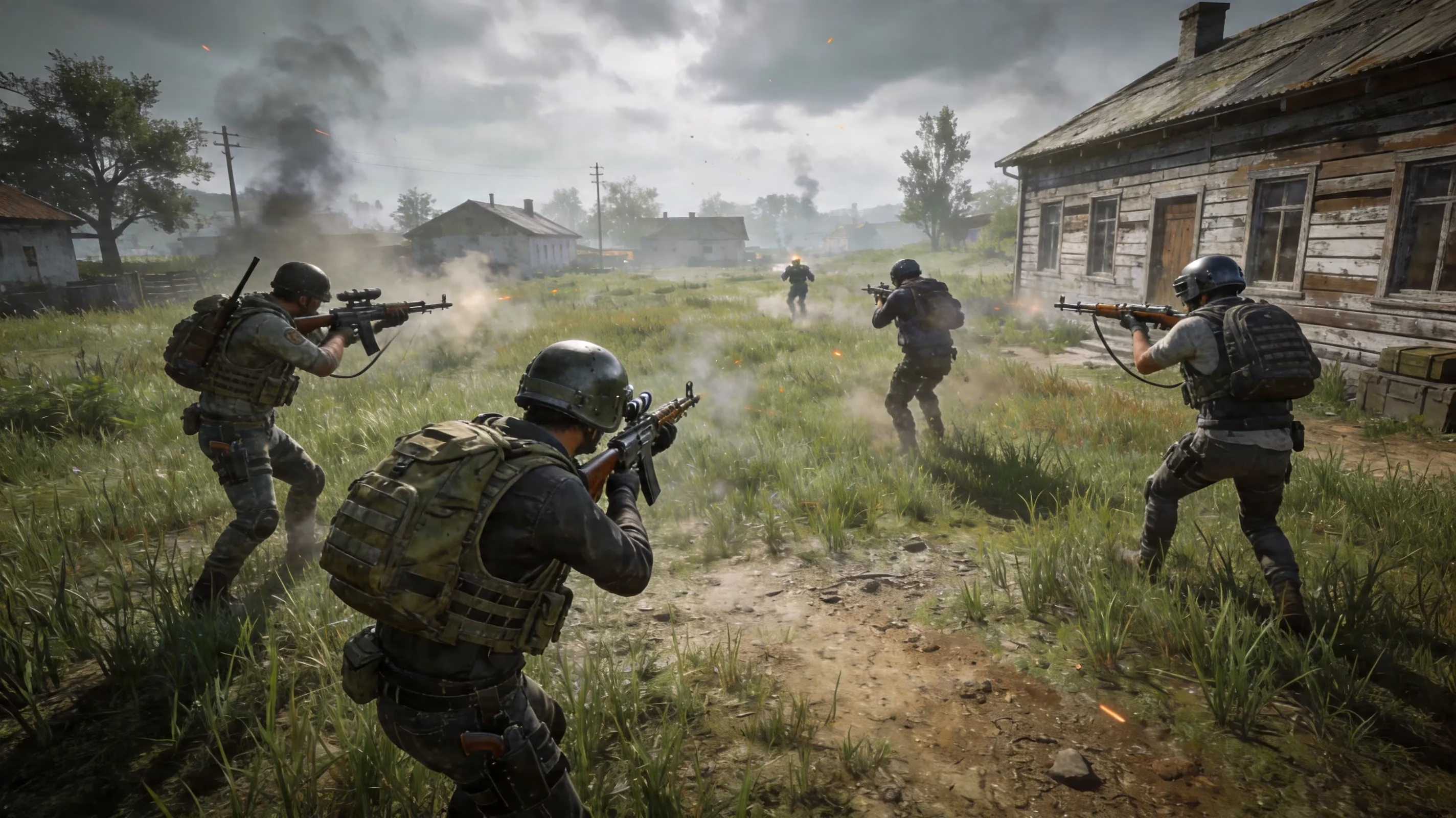
PUBG Bots vs Real Players
The gap between bots and real players is smaller in 2026 than it used to be, but it's still there. Bots are better than before, no question, yet they still don't adapt the way real players do. They don't change strategy mid-match, they don't communicate like actual squads, and they can't really reproduce the messy, unpredictable decision-making that makes human opponents dangerous.
Their aim has improved, but it still has a ceiling. Bots can track and shoot more cleanly than older versions did, though they still lack the subtle pre-aim habits, recoil adjustments, and snap corrections that experienced players build over time. That's usually where the illusion breaks.
Krafton's bigger AI push in 2026 is worth paying attention to here. With a Chief AI Officer in place and the company openly leaning into an "AI-first" strategy, smarter NPC behavior feels like a near-term goal rather than some distant idea. That could mean future bots become better at mimicking regional habits, reacting more naturally, or even adjusting within a match based on player behavior.
There is also a weird side effect to smarter bots: sometimes they can briefly look like bad cheaters. Straight-line aim, awkwardly fast looting, and low-hesitation shooting can make players suspicious at first glance. But Krafton's anti-cheat setup—mixing BattlEye, human review, and behavior-based AI analysis—is built to separate bot signatures from actual cheating patterns. For regular players, that means bot behavior should not be getting mistaken for hacks in any meaningful way, and false bans remain very rare.
From a practical standpoint, bots still serve a useful purpose. They give players a low-pressure warm-up environment for recoil control, loot routing, and weapon testing. They're also handy for daily and weekly quests that ask for kills, headshots, or survival milestones, since bot-heavy Casual Mode lets you work through those objectives without risking ranked progress.
Conclusion
So, are there bots in PUBG? Yes, absolutely—but where you find them depends on the mode, your account, your region, and when you're playing. Casual Mode and off-peak Normal Matches in smaller regions are still the easiest places to run into bot-heavy lobbies in 2026, while Ranked remains, for all practical purposes, a human-only environment.
If you want to spot bots more reliably, pay attention to the common signs: straight-line movement, odd looting choices, robotic healing, slow peeks, limited smoke use, and stiff gunfight behavior. Once you start recognizing those patterns, you'll read your lobbies way better and make smarter choices about whether you're warming up, farming quests, or jumping into matches where every fight is likely to be against a real player.