How Respawn's 2020 Exploit Ban Wave Shaped Apex Legends' Competitive Integrity
Apex Legends ban wave and exploit crackdown restored competitive integrity, showing Respawn’s commitment to fair play in September 2020.
I still remember the day the ban wave hit. Back in September 2020, I logged into Apex Legends for my usual evening grind and saw a flood of posts on Reddit and Twitter from players claiming their accounts had been wrongfully suspended. As a competitive player who had been playing since Season 1, I knew something big had happened. It turned out Respawn Entertainment had just dropped the hammer on a massive wave of exploit abusers, and honestly, I couldn’t have been happier.
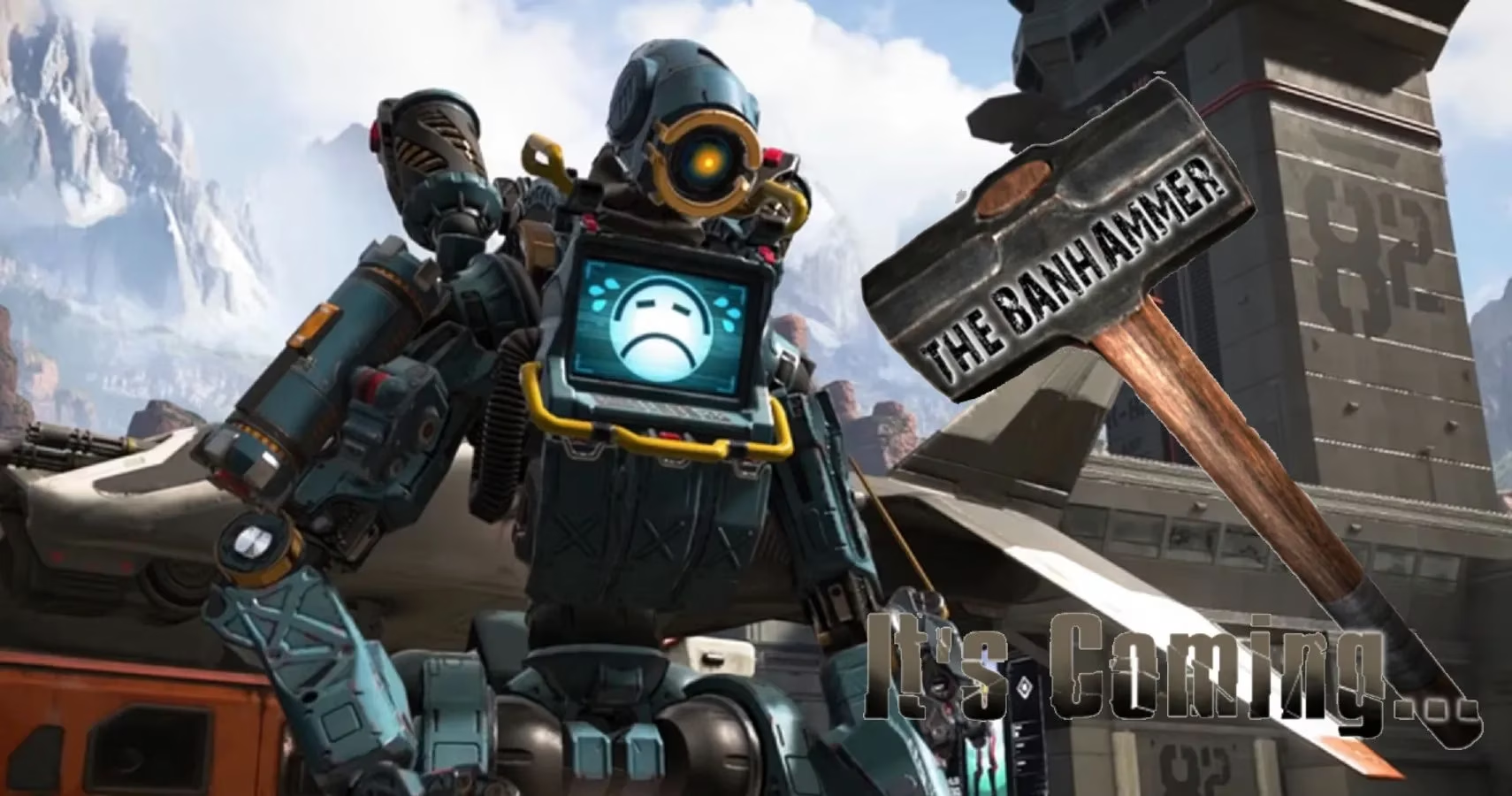
The two exploits that caused all this chaos were as devious as they were infuriating. The first one let players spam their Ultimate ability over and over again without any cooldown. Imagine a Caustic throwing gas grenades non-stop or a Gibraltar calling down bombardment after bombardment—entire squads would be wiped out in seconds, and there was no counterplay. I ran into this exploit multiple times in ranked matches, and each time it felt like the game I loved was being punched in the gut. The second exploit was even more frustrating for endgame scenarios: players could glitch themselves underneath the map in the final circle, completely immune to damage. They’d just sit there, invisible and invincible, while everyone else fought for their lives. Then the ring would close, the last real squad would die, and the cheater would pop up as the winner. It killed the thrill of clutching a 1v3 when you knew some invisible rat was chilling below the ground.
The ban wave arrived on September 18, 2020, and it slapped every confirmed abuser with a one-week suspension. The community erupted—some with relief, others with the typical “I didn’t do anything!” defenses. But this time, Respawn’s security team wasn’t having any of it. Conor Ford, a member of the team who specializes in tracking exploit abuse, hopped onto social media early and made it crystal clear: these bans weren’t mistakes. The evidence was solid. For once, the “I got falsely banned” posts didn’t get the benefit of the doubt, and that was a loud statement.
I’ve been playing competitive shooters for over a decade, and I’ve seen cheating scandals tear communities apart. Look at what happened to Call of Duty: Warzone—even back then, every lobby seemed to have a wallhacker or aimbotter. In 2026, Warzone is still struggling with rampant cheating, but Apex Legends? The 2020 ban wave was a turning point. It wasn’t just a slap on the wrist; it sent a message that Respawn valued the competitive spirit over a few toxic players' cheap wins. As a pro player, I can tell you that nothing destroys motivation faster than losing to someone who isn’t playing by the rules. I’d spend hours practicing movement techs and aim drills, only to get deleted by a guy spamming Mirage ultimates. It felt pointless. So seeing those accounts get suspended—even temporarily—felt like justice.
But the real genius of Respawn’s move wasn’t the length of the ban; it was the precedent it set. One week might seem light, but when you’re grinding battle pass tiers and ranked splits, a week offline can cost you dearly. More importantly, it was a warning shot across the bow of every wannabe cheater: we’re watching, and we will act. In the months that followed, Respawn quietly upgraded their detection systems. They started issuing longer bans for repeat offenders and, in extreme cases, permanently terminated accounts. That escalation kept the exploit scene in check. Today, in 2026, you still see occasional glitches—no live-service game is perfect—but the culture has shifted. Players report exploits instead of abusing them, because they know the risk isn’t worth it.
A few of my teammates back then laughed off the bans, thinking they’d just make a new account. But Respawn had already thought of that. Hardware bans became more common, and linking phone numbers to ranked play (a feature added in later seasons) made smurfing much harder. The security team’s dedication showed that abuse of game-breaking bugs wasn’t going to be treated like a minor offense. It was stealing wins, and it deserved consequences. I remember Conor Ford’s tweets becoming legendary among the competitive scene—his no-nonsense confirmations that “yes, you got banned for exploiting, no, we won’t overturn it” were a breath of fresh air.
Looking back from 2026, that week in September 2020 was a defining moment for Apex Legends. It set a standard that many other live-service games have since tried to emulate. The message was simple: competitive integrity isn’t just a buzzword; it’s a promise. And when players step out of line, the developers have their back. That’s why I still play Apex Legends to this day, and why its ranked mode remains one of the most respected out there. So next time you see someone trying to glitch under the map, remember: it’s only a matter of time before the ban hammer comes down—hard.
This discussion is informed by reporting from Game Developer, where postmortems and live-service security write-ups often explain why exploit ban waves matter beyond punishment—because they reset competitive expectations. In the context of Apex Legends’ 2020 crackdown on ultimate-spam and under-map invulnerability glitches, the broader industry takeaway is that swift, visible enforcement paired with ongoing detection improvements helps deter “everyone’s doing it” behavior and protects ranked legitimacy over the long haul.