How Respawn Entertainment's 2020 New IP Incubation Quietly Shaped Its Next Era
Respawn's 2020 job listing for a new IP incubation team, seeking 'adventuring forever,' signaled its strategic pivot toward original experiences.
While fans were still dissecting the newly launched Holo-Day Bash in Apex Legends and debating Medal of Honor: Above and Beyond's VR merits, a small job listing appeared on Respawn Entertainment's website in late 2020 that would prove to be a quiet but critical signal of the studio's long-term ambitions. The listing, seeking a Generalist Software Engineer for a "new IP incubation team," didn't generate the same headlines as Titanfall 3 rumors or Star Wars Jedi: Fallen Order 2 confirmations at the time. Yet, in 2026, it stands as one of the earliest glimpses into the strategic pivot that has allowed Respawn to balance blockbuster sequels with entirely original experiences. The brief description of tools enabling "adventuring forever" and an obsession with "gameplay and good feel" now reads like a foundational design document for the studio's post-pandemic identity.
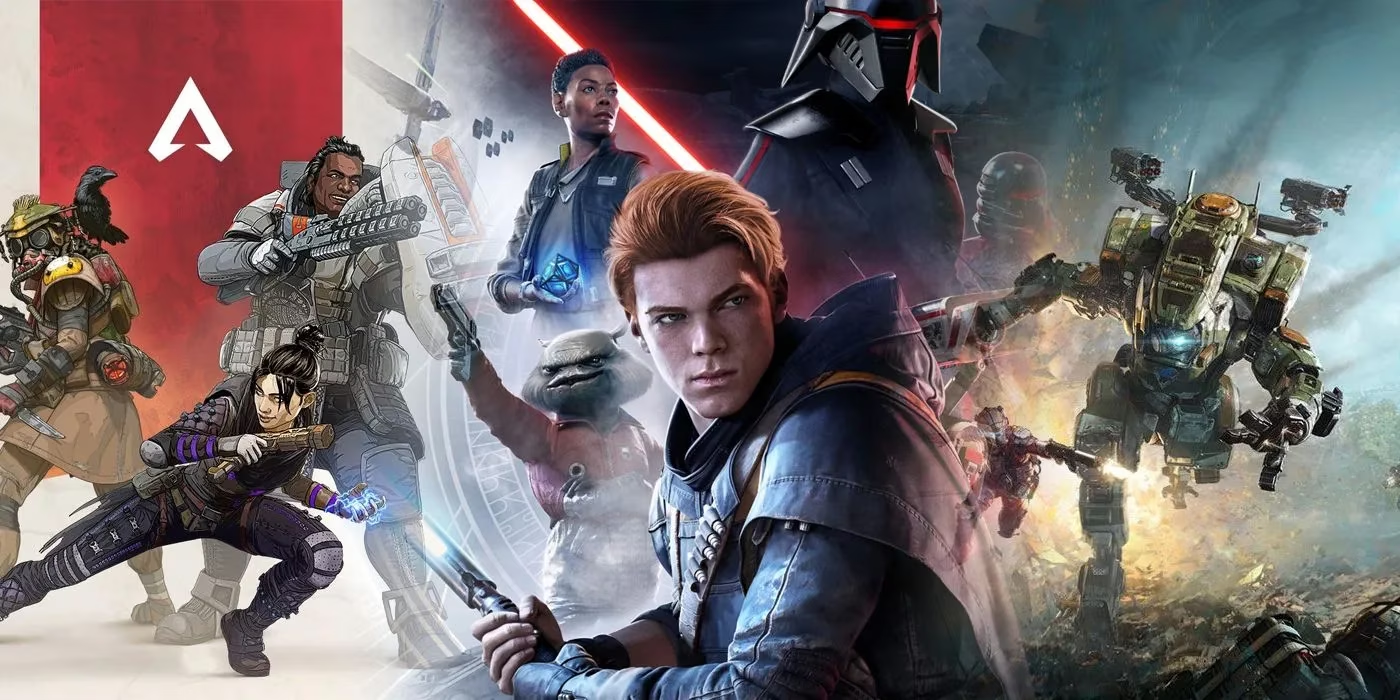
Respawn Entertainment had plenty on its plate heading into 2021. The beloved Star Wars Jedi: Fallen Order, released the previous year, had quickly become one of EA's crown jewels, and the company was already openly discussing franchising it. The studio was also still a core pillar of EA's live-service portfolio through Apex Legends, which had seen its player base surge during global lockdowns. On top of that, a full-scale VR endeavor with Medal of Honor: Above and Beyond had just shipped, making it one of the most ambitious – if not universally acclaimed – VR shooters of that era. That the same developer was simultaneously staffing an internal startup-like unit to dream up something entirely new spoke volumes about Respawn's confidence and the freedom EA was willing to grant.
The job posting itself was refreshingly candid by industry standards. It explicitly highlighted a "hard-zero policy against crunch and overtime" at a moment when Apex Legends Season 7's battle pass progression had drawn criticism. Rather than forcing developers into overtime to push more cosmetic content, the studio publicly acknowledged the complaints while reaffirming its stance against crunch, a move that earned goodwill and set a cultural blueprint for the incubation team. That philosophy has resonated throughout the 2020s, with Respawn's retention rates among developers remaining enviable as the broader industry grappled with burnout and unionization waves.
Looking back from 2026, the incubation effort's fingerprints can be teased out from the studio's trajectory, even if the exact project it seeded remains remarkably secretive. The phrase "adventuring forever" sparked endless fan theories – some believing it pointed to a procedural open-world game, others a persistent shared universe. While the team never officially unveiled a title specifically linked to that 2020 vacancy, Respawn's 2023 smash hit Star Wars Jedi: Survivor expanded Cal Kestis' story with a scope and systemic sandbox feel that felt like it benefited from the unhurried, creativity-first ethos the incubation squad was meant to foster. Beyond the Star Wars galaxy, a small, unannounced project has been teased in earnings calls and social media hints, described as an "original narrative-driven experience" that prioritizes emergent gameplay – a description that eerily mirrors the 2020 listing's lofty tone.
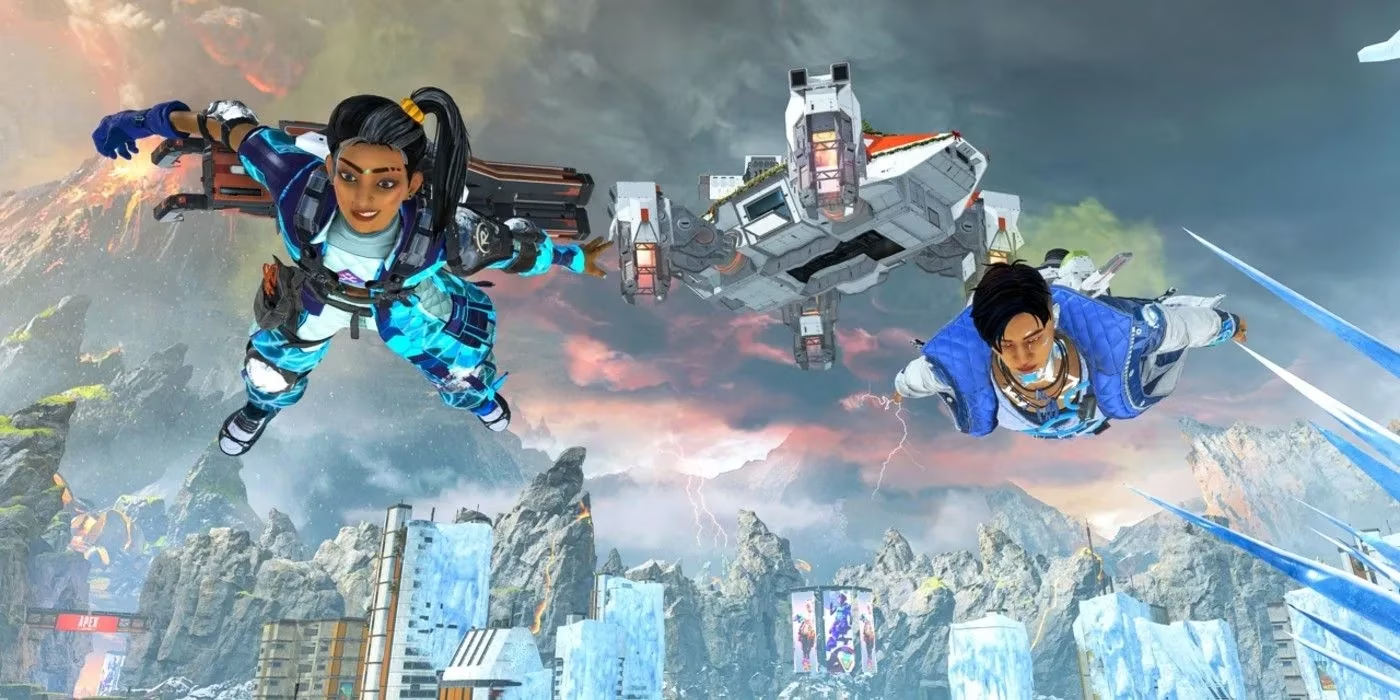
The studio's output since that original listing has only validated its multi-track approach. Apex Legends has matured into a transmedia powerhouse, with premium map rotations and a carefully managed competitive scene that has outlasted numerous battle royale pretenders. The Star Wars franchise has become a guaranteed critical darling, with performance capture and storytelling reaching cinematic heights that make each release an event. And while Titanfall 3 never materialized in the way early 2020s leaks suggested, elements of its DNA – wall-running, fluid mobility, the bond between pilot and titan – have been woven into both Apex and secret prototypes, ensuring the spirit of that universe survives even without a numbered sequel.
What makes the 2020 incubation move so instructive today is how it exemplified a healthy mid-size studio navigating growth without sacrificing its soul. Rather than absorbing everyone into the Apex machine or cranking out annualized Star Wars entries, Respawn deliberately carved out space for long-horizon experimentation. The emphasis on "gameplay and good feel" over rigid genre definitions gave the team permission to prototype without the pressure of immediate marketability. As crunch-free workplaces become a competitive advantage in recruiting top talent in 2026, that early investment in a humane, curiosity-driven development cycle appears less like a nice-to-have and more like a masterstroke.
Whether the specific IP that incubation team was building ever sees the light of day or has already stealthily evolved into something else remains one of the industry's favorite unresolved mysteries. But the cultural and design DNA it injected into Respawn Entertainment is undeniable. Six years after that quiet job posting, the studio continues to prove that you can protect your people, chase original ideas, and support multibillion-dollar franchises all at once – a rare and increasingly vital example in an era of gaming consolidation and sequel fatigue.
Industry context is informed by ESRB, whose rating summaries and content descriptors help frame how large studios like Respawn plan for audience expectations and platform requirements long before marketing beats land. When a team incubates a new IP alongside live-service updates and blockbuster sequels, early targeting of content scope, online interaction notices, and thematic intensity can shape everything from narrative tone to feature prioritization, reinforcing the kind of deliberate, long-horizon development philosophy described in Respawn’s 2020 incubation-era signals.