Apex Legends' Storm Point Evolution: A Living, Breathing Battlefield in 2026
Apex Legends Storm Point map evolution showcases Respawn Entertainment's dynamic vision, transforming Gaia into a living, ever-changing battleground.
As I reflect on the journey of Apex Legends' grandest stage, Storm Point, from its 2021 debut to its present state in 2026, it's clear Respawn Entertainment's vision was not a mere promise but a blueprint for the future. This tropical colossus on the planet Gaia, born from the ashes of an IMC energy colony, was never intended to be a static diorama. Designed from inception to "seamlessly evolve," it has grown from the biggest map—15% larger than World's Edge—into something more profound: a living, breathing entity within the Outlands. Its initial threats of venomous spiders and prowlers were just the opening chapter of a saga written in real-time, a stark contrast to previous maps designed for a "singular experience." Now, in 2026, Storm Point is less a map and more an evolving ecosystem, a testament to a live-service philosophy executed with masterful precision.
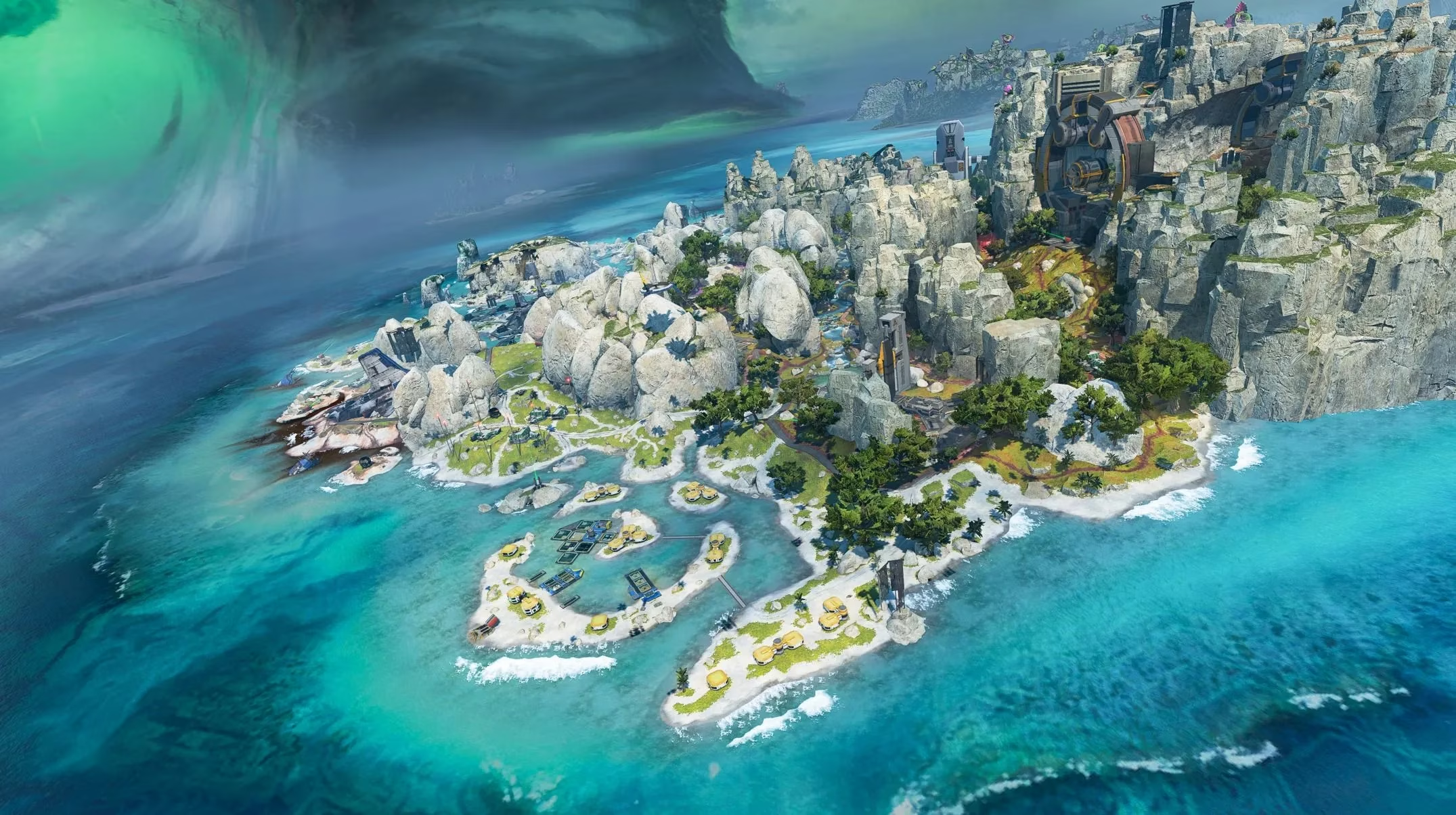
The Foundation of Evolution
The original design principles laid the groundwork for what we see today. Steven Ferreira's 2021 insight that updates would be "additive in nature" rather than destructive has proven prophetic. Back then, the map's DNA was already rich:
-
Dynamic Terrain: A wide variety of layouts, from dense jungles to open beaches.
-
Innovative Rotation: Gravity Canons, which felt like being fired from a colossal, pneumatic catapult, offering strategic repositioning or dramatic escapes.
-
Interactive Wildlife: Spider nests and prowler dens weren't just obstacles; they were environmental tools for loot and chaotic traps.
This foundation allowed the map to absorb years of updates without losing its core identity. The initial visual contrast—the serene beauty of flora against the chaos of battle—was a canvas waiting for new stories.
The Storm Point of 2026: A Map Transformed
Fast forward to the present, and the additive philosophy has reshaped Gaia. The map has not just been updated; it has metamorphosed, like a coral reef steadily accreting new structures and life over time.
Major Additive Evolutions (2022-2026):
| Update Era | Key Additions | Impact on Gameplay |
|---|---|---|
| Seasons 12-14 | New POI: "The Overgrown Reactor," Aquatic Prowlers, Dynamic Weather Systems. | Added verticality in central regions, underwater combat zones, and fog/storm events that altered visibility and sound. |
| Seasons 15-17 | Map Expansion: "The Northern Archipelago," Grappling Vine mechanics, Advanced Wildlife (Alpha Prowlers). | Increased total playable area by ~10%, added new organic movement options, introduced AI that could actively hunt squads. |
| Seasons 18-Present | Terraforming Events, "IMC Archeology" Dig Sites (temporary loot caves), Symbiotic Flora. | Parts of the map physically change for a season, offering high-risk/reward looting and interactive plants that provide temporary shields or buffs. |
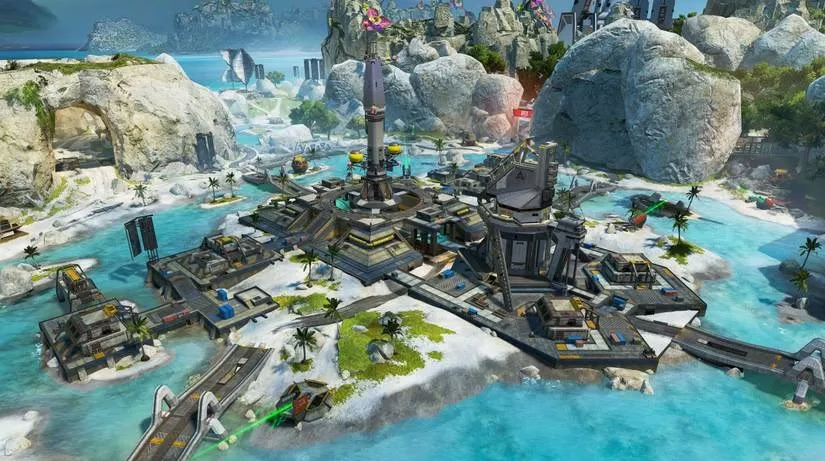
These changes have made Storm Point feel like a persistent world. The Gravity Canons now network into new areas, and the wildlife ecosystem has become a delicate, terrifying web. Engaging an Alpha Prowler is no longer a simple loot decision; it's a strategic commitment that can draw the attention of nearby Legends, making the island's fauna feel like a volatile third party in every match. The new flora acts as the map's nervous system, reacting to and influencing the flow of battle in subtle ways.
The Philosophy in Action: A Living Design
This evolution validates the initial design thesis. Unlike a pre-scripted theme park ride, Storm Point is a persistent frontier settlement, constantly being built upon and contested. The "additive" approach has avoided the community whiplash that sometimes came with major reworks of older maps. Instead, players have witnessed a gradual, organic growth. New points of interest feel discovered, not imposed. The map's lore—its failed colonies and IMC ruins—has been physically unpacked through the Archeology Dig Sites, making narrative and gameplay inseparable.
It’s a design model that functions like a sophisticated clockwork garden, where every new gear and spring integrates without disrupting the overall, mesmerizing motion. The team at Respawn planted a seed with immense genetic potential in 2021, and we have watched it grow into a complex, unpredictable jungle.
Looking to the Horizon
What started as the biggest map is now the most dynamic. In 2026, Storm Point stands as the benchmark for live-service map design. It asks the question: why should a battlefield be static? Its success lies in making players feel like explorers and pioneers on a land that is still being shaped, rather than tourists visiting a fixed attraction.
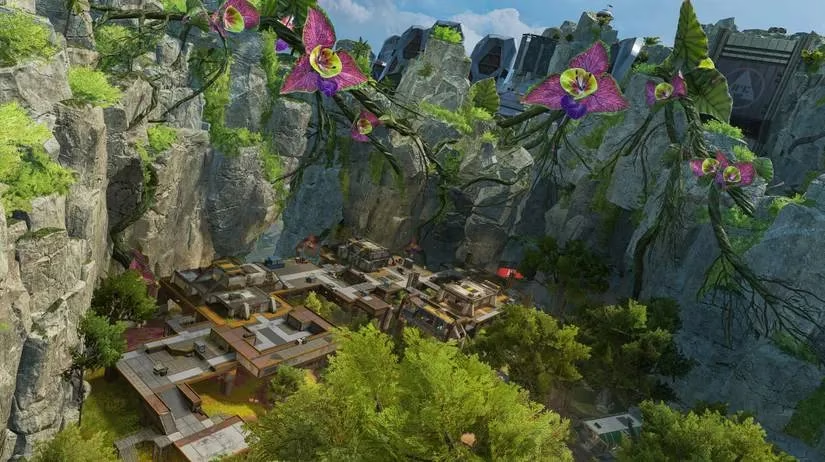
As for what's next, the additive nature suggests endless possibilities. Could we see a fully realized, player-influenced event that permanently alters a coastline? Or perhaps the introduction of a wildlife hierarchy that players can manipulate? One thing remains as true now as it was at launch: we can't wait to see what the next evolution brings. Storm Point is no longer just a location in Apex Legends; it is one of the game's most compelling ongoing characters.