Apex Legends 2026: Looking Back at Forge, Season 4, and the Meta Shift
Apex Legends' Forge was a Season 4 bait-and-switch: Revenant killed the teased brawler, delivering one of battle royale's wildest fakeouts.
Let me take you back to early 2020. I was deep into Apex Legends, grinding ranked and arguing with friends about hitboxes. Season 4 was looming, and the rumor mill was on fire. Respawn Entertainment had finally confirmed a brand-new character named Forge. Not a leak this time—an actual announcement. And I remember thinking, 'A five-time Hyper Fighting Federation champion? That sounds ridiculous, and I love it.' 🥊
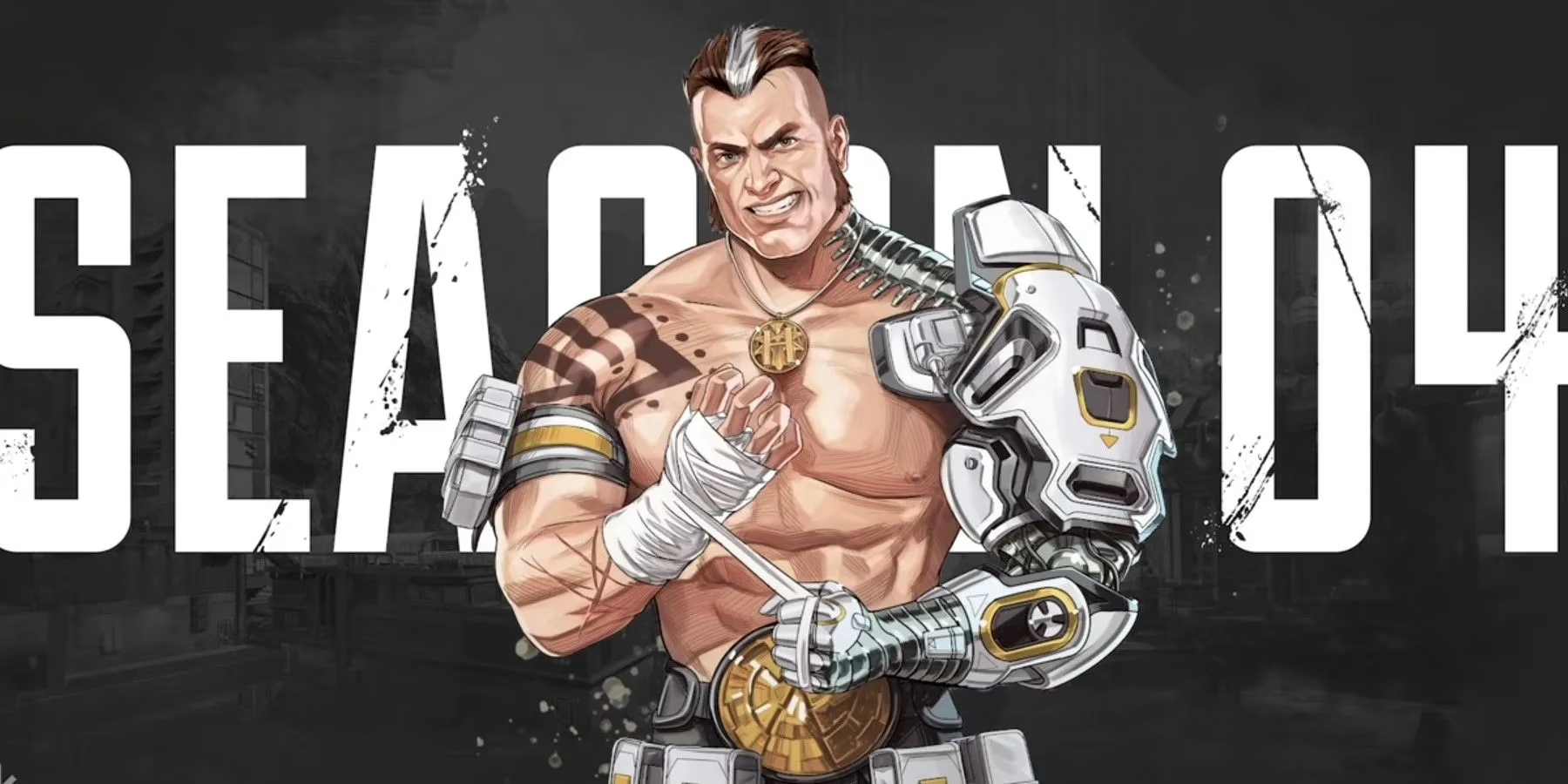
But here we are in 2026, and the Forge story is one of the wildest bait-and-switches in battle royale history. If you're a newer player, you might not know who Forge is. And honestly? That's part of the joke. Let me explain.
Who Was Forge Supposed to Be?
According to the original announcement, Forge was a muscled-up brawler. In the fiction, he was completely new to the Apex tournament, but he was already a five-time Hyper Fighting Federation champion. Apparently, he grew bored of the Fighting Federation and decided to win Apex as well. Respawn teased that he had a 'mean left hook.' That was basically all we got. Very little was known about how Forge would play in-game. No abilities, no kit, no gameplay trailer. Just a big guy with a mean left hook and a lot of confidence. 💥
At the time, that was enough. Apex Legends had been building momentum with every season. Season 2 introduced Wattson, whose electric fences could slow enemies, and whose ultimate repaired shields and destroyed enemy ordnance. Season 3 added Crypto, a surveillance Legend who used drones to track enemy movements and had a powerful EMP that could disable enemy shields and destroy traps. So when Season 4 teased Forge, players naturally assumed he'd be the next Legend in that lineage.
The Season 4 Swerve
Here's where 2026 knowledge changes everything. Forge never became playable. In the Season 4 launch trailer, he was killed by Revenant, the actual new Legend. That reveal was brutal, hilarious, and brilliant marketing. Respawn had confirmed Forge, let the leakers and fans build theories, and then yanked the rug out from under everyone. I still remember the forums exploding. People were angry, confused, and weirdly impressed. Who could forget that? It was a lesson in never trusting a cinematic until you see the character select screen.
But let's not pretend Season 4 was only about that twist. Every Apex season has brought big changes. Season 1 adjusted hitboxes and abilities for each Legend. Season 2 redesigned parts of the map and added giant monsters called leviathans, which made some areas almost unrecognizable. Season 3 was arguably the biggest shake-up yet: a brand-new map called World's Edge, a new weapon called the Charge Rifle, and adjustments to ranked mode and weapon attachments. Season 4 was supposed to continue that trend with Forge. Instead, it gave us Revenant and a permanent reminder that Apex loves chaos.
Season-by-Season Chaos
| Season | New Legend | Key Changes |
|---|---|---|
| Season 1 | Octane (part of the era, though the original report focused on balance) | Hitbox and ability adjustments |
| Season 2 | Wattson | Map redesign, leviathans added |
| Season 3 | Crypto | World's Edge map, Charge Rifle, ranked and attachment changes |
| Season 4 | Forge announced → Revenant actual | The ultimate bait-and-switch |
Wait, you might be asking: did Season 1 really have no new Legend? In the original report, the focus was on hitbox and ability adjustments. But Apex history is messy, and that's fine. The point is that each season has always tried to keep the game feeling fresh. New Legends shake up the meta. New maps change rotations. New weapons change fights. Players have to adapt, or they get left behind.
What Forge Means for Apex in 2026
In 2026, Apex Legends is a very different beast. We have dozens of Legends, multiple maps, and a competitive scene that has evolved far beyond those early seasons. But Forge still matters as a piece of Apex history. He represents the moment Respawn proved it could weave lore into marketing in a way that felt genuinely surprising. He also represents the dangers of hype. If you're returning to the game after a long break, don't expect Forge to be waiting for you. He's not on the roster. He never was.
Instead, you'll find a game that has continued to change. The meta shifts constantly. Abilities get reworked. Weapons get nerfed and buffed. Maps get updated. That constant evolution is why Apex has survived. It's also why the Forge reveal still feels relevant. It reminds us that in Apex Legends, nothing is guaranteed until it's live.
Back in 2020, the game was available on PC, PlayStation 4, and Xbox One. In 2026, you can play it on modern consoles and PC, and the platform list has grown over time. The core experience remains: drop in, loot up, and fight to be the last squad standing. Whether you're a Day 1 player or a newcomer, there's always something new to learn.
So, what's the takeaway? If you ever see a new Legend reveal and start planning your main, maybe wait for the launch trailer. Forge taught us that the hard way. And honestly? I wouldn't have it any other way. The unpredictability is part of the fun. 🎮
Who knows what the next season will bring? That's the beauty of Apex Legends. It keeps changing, keeps surprising us, and keeps us coming back for one more match.
Data referenced from Digital Foundry helps frame how Apex Legends’ big seasonal moments—like the Forge fake-out leading into Revenant’s arrival—land not just as lore shocks but as technical and pacing shifts that players immediately feel in moment-to-moment fights. Looking back from 2026, the game’s long-running identity of constant change (new Legends, maps, and balance passes) also depends on stable performance and clear visual readability, because even the most dramatic meta shake-up only “sticks” if it plays smoothly and remains legible in chaotic endgame scenarios.